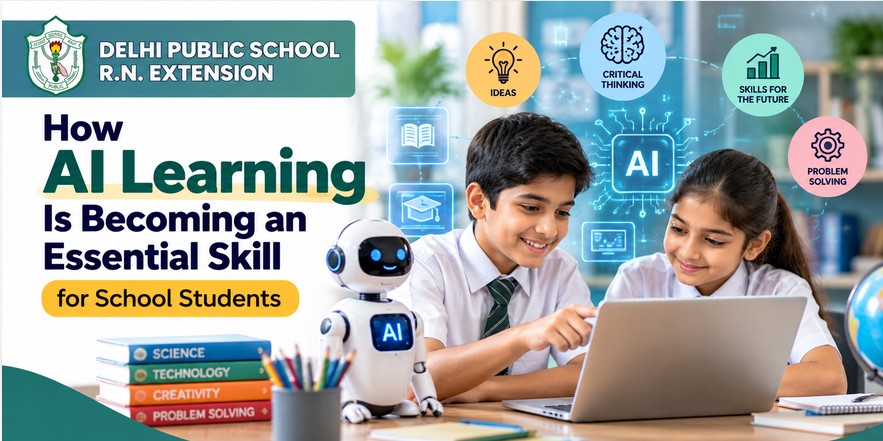

Technology is changing the way children learn, communicate and solve problems. Artificial intelligence is already influencing education, careers and everyday life. In this environment, children need more than subject knowledge. They need strong foundational Skills to think clearly, communicate well and adapt to new challenges.
Many educators believe that foundational stage during the early years shapes how students learn later in life. Schools that focus on these skills prepare children not only for academic success but also for a future in which technology continues to advance.
Early Learning Builds the Base for Future Thinking
The first years of education lay the foundation for a child’s learning journey. During this stage, children begin to develop reading habits, listening skills and basic problem-solving skills. These abilities form the core of strong foundational Skills.
When schools focus on foundational skills in children, students develop curiosity and confidence in learning. They ask questions, explore ideas and express their thoughts clearly. Parents often prefer a school that encourages such learning habits from the start, especially as the impact of AI on early-age learning becomes more visible.
Critical Thinking Helps Children Understand Technology
Artificial intelligence can provide answers quickly, yet children must learn how to think independently. Critical thinking is one of the most important for children's holistic development.
Students who experience strong to analyse information instead of accepting it without questioning. They begin to understand how technology works and how to use it responsibly.
Schools that teach important early skills help children get ready for a future where Artificial Intelligence will play a bigger role in how young students learn.
Communication and Language Skills Remain Essential
Even in a technology-driven world, human communication remains irreplaceable. Children must learn to express ideas clearly through speaking, reading and writing.
Language development is a key part of early-age. When schools nurture communication ability at an early stage, students gain confidence in classroom discussions, presentations and teamwork.
Creativity and Curiosity Support Lifelong Learning
Artificial intelligence can process information quickly, yet creativity remains a human strength. Encouraging curiosity during childhood helps students develop imagination and problem-solving ability.
Emotional Growth Builds Confidence in Students
Children also need emotional awareness and social understanding to grow into confident individuals. Skills such as empathy, teamwork and self-discipline form an important part of foundational skills.
During early-age, students learn how to interact respectfully with classmates and teachers. They develop patience, cooperation and responsibility in everyday school activities.
These abilities prepare children to navigate both real-world relationships and digital environments influenced by the AI on early age communication. Schools recognised as a top school near Indirapuram often combine academic learning with strong character-building programs.
Schools Play a Key Role in Shaping Early Skills
Parents often look beyond academic scores when selecting a school. They want an environment where children can build confidence, curiosity and strong learning habits.
Preparing Children for Tomorrow Starts with the Right School
The future will need students who can think clearly, adapt to change, and keep learning as the world evolves. Building strong skills during childhood helps children develop confidence and curiosity while facing new technologies and opportunities.
At DPS, a strong focus is placed on children’s holistic development through structured learning, communication skills, creativity and critical thinking. For parents searching for a top school near Indirapuram, DPS provides an environment where children grow with the right balance of academic learning and future-ready skills while understanding the AI impact on early age education.
FAQ’S
1. What are Foundational Skills in early childhood education?
Foundational Skills include basic abilities such as reading, writing, communication, problem-solving and critical thinking. These skills form the base of a child’s learning journey and help students understand concepts clearly while adapting to modern learning environments influenced by the AI in education.
2. Why is Foundational Development in Children important in the AI age?
Teaching foundational skills in children help them build thinking ability, creativity and communication skills. As technology grows, children need these abilities to understand information, solve problems and learn independently.
3. How does AI impact early-age learning for children?
The AI impact on early age learning is seen in smart classrooms, digital learning tools, and personalized education platforms. These technologies support learning, yet children still need strong foundational skills such as reasoning, creativity and communication to understand and apply knowledge effectively.
4. What skills should schools focus on during early childhood education?
Schools should focus on by building skills such as:
• Reading and language development
• Basic numeracy and logical thinking
• Communication and creativity
• Problem solving ability
• Social and emotional learning