In today's rapidly evolving world, academic excellence alone is no longer enough to prepare students for future success. Parents are increasingly looking for schools that offer a balanced education—one that combines strong academics, sports participation, and essential life skills. Smart schools understand that children need more than textbook knowledge to thrive in higher education, careers, and life.
The most progressive schools are now creating learning environments where academic achievement, physical fitness, leadership, communication, teamwork, and emotional intelligence develop together. This integrated approach helps students become confident, adaptable, and future-ready individuals.
Quick Answer
Smart schools combine academics, sports, and life skills by creating a holistic learning environment where classroom learning is supported by physical activities, leadership opportunities, teamwork, problem-solving exercises, and real-world experiences. This approach develops well-rounded students who excel academically while building confidence, resilience, communication skills, and emotional intelligence.
Why Education Is Changing Beyond Academics
For decades, academic scores were considered the primary measure of a student's success. While strong academics remain important, employers and universities today increasingly value skills such as critical thinking, collaboration, creativity, adaptability, and leadership.
According to global education trends, students who participate in sports and co-curricular activities often demonstrate stronger communication skills, better time management, and higher levels of self-confidence.
As a result, many of the best schools are moving beyond traditional teaching models and embracing a more comprehensive approach to education.
The Rise of Holistic Education in Smart Schools
Holistic education focuses on developing every aspect of a child's personality rather than concentrating solely on academics.
A holistic educational model includes:
- Academic excellence
- Physical fitness and sports
- Leadership development
- Emotional well-being
- Creativity and innovation
- Social responsibility
- Communication skills
- Character building
This balanced approach helps students discover their strengths while developing the skills needed to navigate future challenges.
How Academics and Sports Work Together
Many parents worry that sports may distract students from academics. However, educational research consistently suggests the opposite.
Students involved in sports often develop:
- Better concentration
- Improved memory retention
- Stronger discipline
- Effective time management
- Greater resilience
- Enhanced problem-solving abilities
Sports teach valuable lessons that directly benefit academic performance. Learning to work towards goals, manage setbacks, and maintain consistency often translates into better classroom outcomes.
Academic Benefits of Sports Participation
| Sports Skills | Academic Benefits |
|---|---|
| Discipline | Improved study habits |
| Focus | Better classroom attention |
| Teamwork | Stronger collaborative learning |
| Goal Setting | Improved academic planning |
| Resilience | Better handling of exam pressure |
| Time Management | Balanced academic performance |
This is why smart schools integrate sports into their educational philosophy rather than treating them as optional activities.
Why Life Skills Have Become Essential
Life skills are the abilities that help students manage everyday challenges, build relationships, make decisions, and succeed in professional environments.
Some of the most important life skills include:
- Communication
- Leadership
- Critical thinking
- Problem-solving
- Adaptability
- Emotional intelligence
- Decision-making
- Collaboration
In a world where technology is constantly changing industries, these human-centered skills have become increasingly valuable.
How Smart Schools Build Life Skills Naturally
The best schools don't teach life skills through lectures alone. Instead, they create experiences that allow students to develop these competencies naturally.
Examples include:
Group Projects
Students learn:
- Teamwork
- Communication
- Responsibility
- Leadership
Student Leadership Programs
Leadership opportunities help students:
- Build confidence
- Take initiative
- Manage responsibilities
- Develop decision-making abilities
Sports Competitions
Sports teach:
- Resilience
- Strategic thinking
- Collaboration
- Healthy competition
Cultural Activities
Participation in cultural events helps students:
- Improve public speaking
- Develop creativity
- Build confidence
- Express themselves effectively
The Role of Technology in Smart Schools
Technology is transforming modern education by making learning more interactive and engaging.
Today's smart schools often provide:
- Digital classrooms
- Interactive learning platforms
- Smart boards
- Online learning resources
- STEM education opportunities
- Technology-enabled assessments
When used effectively, technology enhances learning while helping students develop digital literacy skills necessary for future careers.
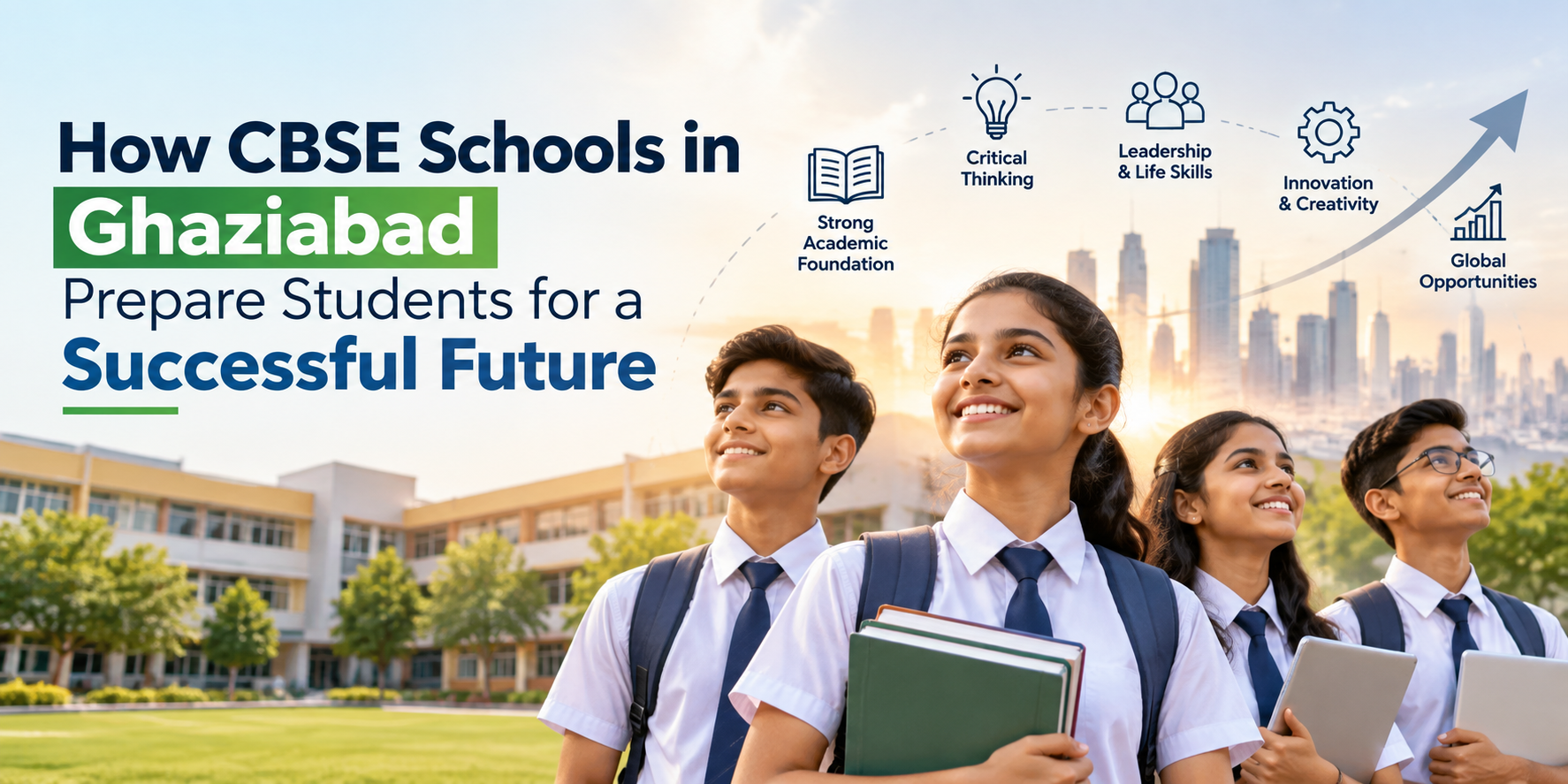
Creating Future-Ready Students
Future-ready education goes beyond preparing students for examinations.
Modern schools focus on helping students become:
Critical Thinkers
Students learn to analyze information, evaluate options, and make informed decisions.
Effective Communicators
Clear communication remains one of the most valuable skills in higher education and professional life.
Collaborative Learners
Teamwork and collaboration are increasingly important in modern workplaces.
Adaptable Problem Solvers
Students learn to approach challenges creatively and confidently.
Responsible Citizens
Schools play a vital role in developing empathy, ethics, and social responsibility.
How DPS Raj Nagar Extension Supports Holistic Student Development ?
Among the leading educational institutions in Ghaziabad, DPS Raj Nagar Extension follows a comprehensive educational philosophy that balances academics, sports, and life skills development.
As part of the prestigious Delhi Public School Society, the school is committed to nurturing confident, responsible, happy, and successful individuals.
The school's learning environment supports holistic growth through:
- CBSE-based academic excellence
- Digital and IT-enabled classrooms
- Well-equipped Science, Mathematics, Computer, and Social Science laboratories
- Sports and physical development opportunities
- Creative and cultural activities
- Leadership and personality development programs
- Dedicated and experienced faculty
- Safe and secure campus environment
- 10-acre green campus conducive to joyful learning
The school's philosophy combines Indian values with a global outlook, helping students develop into well-rounded individuals prepared for future challenges and opportunities.
What Parents Should Look for in a Smart School ?
When evaluating schools, parents should consider whether the institution offers a balanced educational experience.
Ask these important questions:
- Does the school focus only on academics or overall development?
- Are sports and physical education given adequate importance?
- How are life skills incorporated into daily learning?
- Are leadership opportunities available for students?
- Does the school encourage creativity and innovation?
- Is the learning environment safe and supportive?
- Are students prepared for both examinations and life?
The answers to these questions often reveal how effectively a school prepares students for long-term success.
Summary
The future belongs to students who can do more than score high marks. They must be able to think critically, communicate effectively, collaborate with others, adapt to change, and lead with confidence.
Smart schools recognize this reality and are transforming education by combining academics, sports, and life skills into one integrated learning experience. This holistic approach not only improves academic outcomes but also prepares students to thrive in higher education, careers, and life.
For parents seeking a school that supports complete child development, choosing an institution that balances academic excellence with sports participation, character building, and life skills education can make a lasting difference in a child's future success.
Frequently Asked Questions
Why are sports important alongside academics?
Sports help students develop discipline, teamwork, resilience, confidence, and time-management skills, all of which contribute positively to academic performance and personal development.
What are life skills in education?
Life skills include communication, leadership, critical thinking, emotional intelligence, problem-solving, adaptability, and decision-making abilities that help students succeed in life and careers.
How do smart schools prepare students for the future?
Smart schools combine academics, technology, sports, and life skills development to create well-rounded, future-ready learners capable of adapting to changing environments.
Can students excel in both academics and sports?
Yes. Many studies show that students involved in sports often demonstrate stronger focus, discipline, and time-management skills, which can improve academic performance.
What is holistic education?
Holistic education focuses on developing a child's intellectual, emotional, social, physical, and creative abilities rather than concentrating solely on academic achievements.
What should parents look for in a future-ready school?
Parents should evaluate academic quality, sports facilities, life skills programs, teacher expertise, technology integration, student safety, and opportunities for overall personality development.