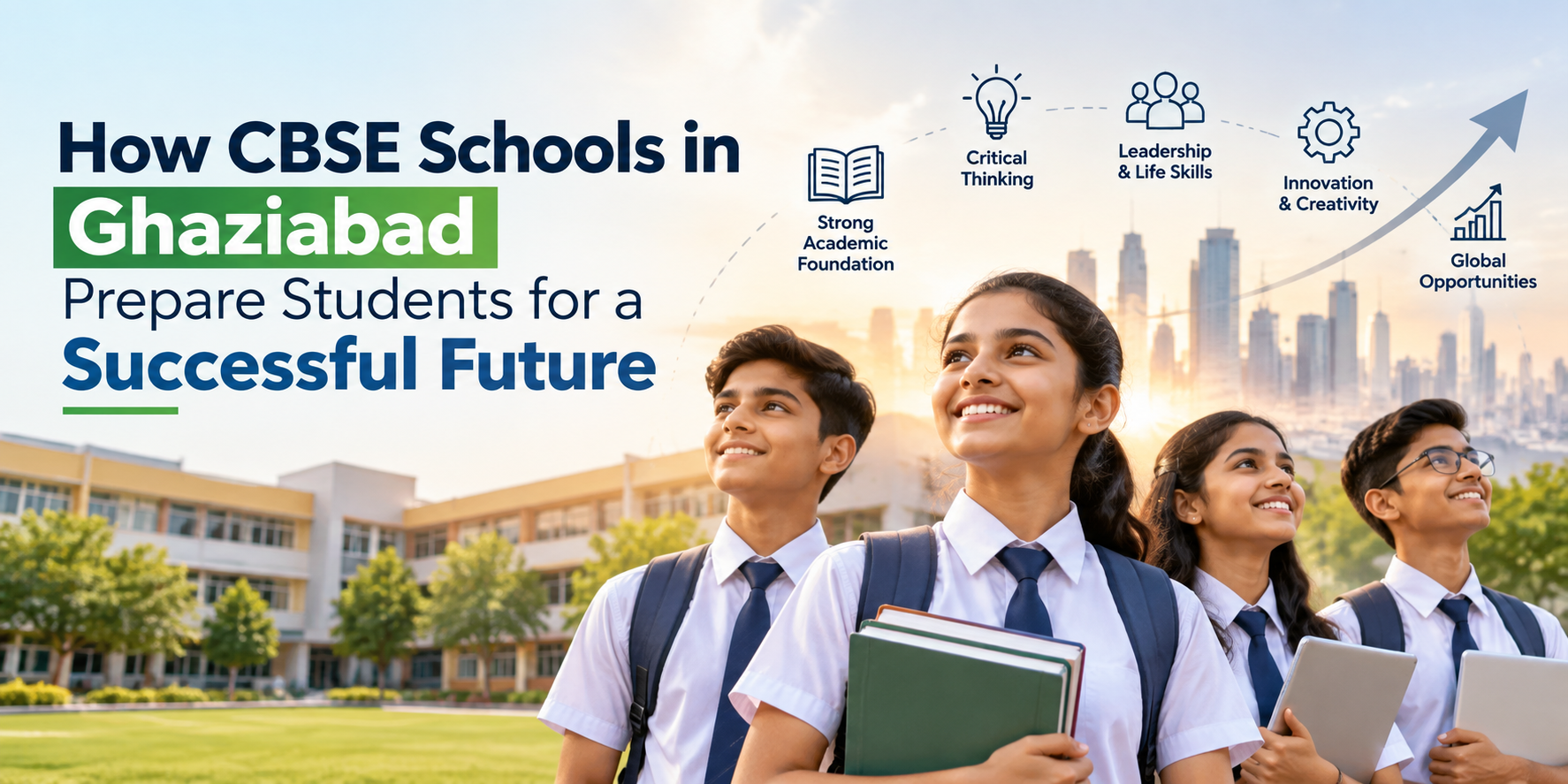
In today’s fast-evolving world, textbook knowledge alone is no longer enough to guarantee a successful future. Parents across Ghaziabad and nearby areas like Indirapuram, Crossings Republik, and Meerut Road frequently ask a vital question: How can we prepare our children for real-world challenges, complex problem-solving, and leadership roles?
The answer lies in progressive education that moves beyond simple rote memorization. At Delhi Public School R. N. Extension (DPS R. N. Extension), we bridge the gap between theoretical concepts and real-world application through Project-Based Learning (PBL). By replacing passive listening with active creation, Project-Based Learning cultivates crucial Practical Skills for Students, turning young learners into confident, self-reliant achievers.
What is Project-Based Learning?
Project-Based Learning is a dynamic, student-centric teaching methodology where children gain knowledge and skills by working over an extended period to investigate and respond to authentic, engaging, and complex questions or real-world challenges.
[ Real-World Problem / Challenge ] │ ▼ [ Research & Investigation ] │ ▼ [ Collaborative Team Execution ] │ ▼ [ Tangible Solution & Presentation ]
Instead of simply reading about environmental conservation or mathematical geometry, students at DPS R. N. Extension build working models, conduct research, debate solutions, and present their findings. This continuous cycle of inquiry makes education meaningful, exciting, and deeply memorable.
Key Practical Skills Students Develop Through Project-Based Learning
Through structured Experiential Learning and hands-on projects, students build essential life capabilities that standard classroom lectures simply cannot teach:
1. Critical Thinking and Problem-Solving
When students face open-ended project questions, there is no single "correct" answer at the back of a textbook. They must analyze data, evaluate options, test hypotheses, and overcome setbacks. This builds resilience and sharpens analytical thinking.
2. Collaboration and Leadership
Real-world success relies heavily on teamwork. In project groups, children learn how to delegate tasks, respect diverse opinions, manage internal conflicts, and lead collective initiatives—preparing them for future corporate and entrepreneurial environments.
3. Effective Communication
A project is not complete until its findings are shared. Students present their ideas using digital tools, public speaking, and visual media. This ongoing practice builds immense public speaking confidence from an early age.
4. Time Management and Organization
Working on multi-step projects teaches children how to set milestones, organize resources, manage deadlines, and take personal accountability for their work.
The DPS R. N. Extension Advantage: Nurturing Global Leaders
Carrying forward the distinguished legacy of the Delhi Public School Society, DPS R. N. Extension stands as a premier citadel of learning spread over a 10-acre lush green, pollution-free campus. As a top CBSE school in Ghaziabad, our institutional philosophy blends rich Indian values with a global outlook.
Why Parents Choose DPS R. N. Extension:
Digital & IT-Enabled Classrooms: Modern smart classrooms that bring project research and interactive learning to life.
State-of-the-Art Laboratories: Fully equipped science, mathematics, computer, and social science labs designed for deep Learning by Doing.
Holistic Skill Clubs: Dedicated clubs like Let's Spark (Science), Invariants (Maths Club), The Planeteers (Environment), that provide structured Skill-Based Education.
Uncompromising Safety: A fully secured network of CCTV cameras, dedicated transport management, and a caring, trained staff ensure a safe environment for every child.
Comparing Learning Approaches: Traditional vs. Project-Based
| Educational Aspect | Traditional Learning | Project-Based Learning (PBL) |
|---|---|---|
| Student Role | Passive listener absorbing notes | Active researcher, innovator, and creator |
| Primary Focus | Rote memorization and exam scores | Experiential Learning and practical skill acquisition |
| Teacher Role | Direct lecturer | Mentor, facilitator, and project guide |
| Skill Outcome | Theoretical retention | Problem-solving, collaboration, and critical thinking |
Frequently Asked Questions
Q1. Does Project-Based Learning affect CBSE board exam preparation?
Not at all. In fact, it strengthens board exam performance. By mastering core concepts through practical projects, students develop a deeper conceptual understanding, making it much easier to tackle application-based and analytical questions in CBSE examinations.
Q2. How does DPS R. N. Extension ensure child safety on campus?
The safety and well-being of our students are paramount. Our 10-acre campus is monitored by a complete network of CCTV cameras, secure entry-exit points, dedicated transport attendants, and a deeply vigilant teaching staff.
Q3. Is transport facility available for nearby areas like Indirapuram, Crossings Republik, and Meerut Road?
Yes. DPS R. N. Extension operates a well-managed fleet of buses equipped with safety features and trained attendants, servicing key residential areas across Ghaziabad, including Raj Nagar Extension, Indirapuram, Crossings Republik, and Meerut Road.
Q4. What is the eligibility age for Nursery admission at DPS R. N. Extension?
For admission to Class Nursery, the child should be at least 3 years old as of 31st July of the academic session year. Detailed guidelines are available on our official website.
Give Your Child the Gift of Progressive Education
Choosing the right school is the most significant investment you make in your child's future. At DPS R. N. Extension, we nurture curiosity, encourage creative freedom, and impart practical life skills that prepare students to excel in an ever-changing world.
Help your child become a confident, responsible, happy, and successful global citizen.
👉 Apply for Admission at DPS R. N. Extension and secure your child's bright future today!